
How to run an office footy tipping competition
Updated · 8 minute read
A good office tipping comp is the easiest bit of team culture you’ll ever run. Once a week, everyone has a reason to talk to someone in a different team, and the ladder gives Monday morning something to argue about. A bad one is a spreadsheet, a pile of reply-all emails and one person spending their Friday chasing tips.
This guide covers what actually makes an office comp work: rules people understand, getting everyone in without fuss, keeping them tipping in round 14, prizes, and keeping it fair. It works for AFL or NRL, and for a team of 8 or a floor of 80.
1. Pick the competition and keep the format simple
Start with the code most people follow. In a mixed office, you can run an AFL comp and an NRL comp side by side: people join whichever they like, or both, and tip them from the same account.
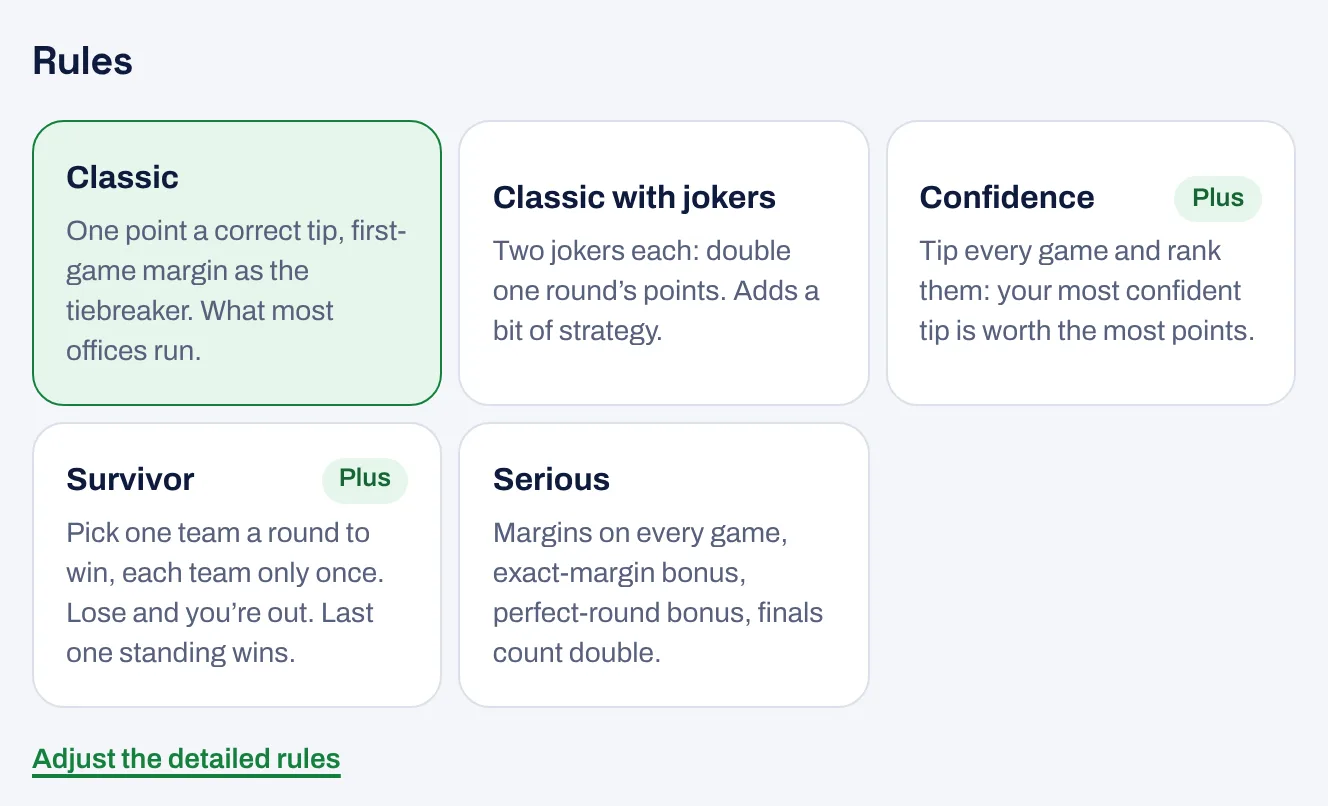
For the format, straight tipping is the right default: pick the winner of every game, one point each, highest total wins. Everyone understands it in five seconds, and it rewards people who keep turning up. If you want a bit more strategy, add a couple of jokers (each one doubles a round’s points, played before the round starts). Save the more involved formats for a second comp:
- Survivor: pick one team a round to win, each team only once a season. Lose and you’re out. Great for a late start, because nobody is already 30 points behind.
- Confidence: tip every game and rank them by how sure you are. Your surest tip is worth the most. Popular with people who think straight tipping is too much luck.
2. Decide the small stuff before round 1
Almost every office tipping argument comes from a rule nobody wrote down. Settle these before the first game, and put them in the comp’s note so everyone can see them:
- The tiebreaker. A margin on the first game of each round is the classic: tip how much the winner wins by, and when two people are level on points, the one with fewer margin points out wins.
- Missed tips. Score nothing, or count as the home team (or the away team). “Scores nothing” keeps people honest; “home team” is kinder in a comp full of casual tippers.
- People who join late. Someone always joins in round 4. Give them the lowest score from each round they missed (the default), the average, or nothing.
- When tips lock. At each game’s kickoff is fairest for people who tip on the day. Locking the whole round at the first game suits comps that want tips in by Thursday night.
- Draws. Decide whether everyone who tipped scores, gets half points, or nobody does.
Rules that change scores lock once the season starts, so nobody can quietly tweak the rules in week 10. You can find every option, with what most comps choose, in our footy tipping rules guide.
3. Invite everyone in one message
The fewer steps between “footy tipping is on” and someone’s first tip, the more people you’ll get. Send one short link in Teams, Slack or email. Nobody needs a password or an app: they tap the link, put in their mobile or email, enter the 6-digit code, pick the name the comp will see and they’re in, in about 30 seconds.
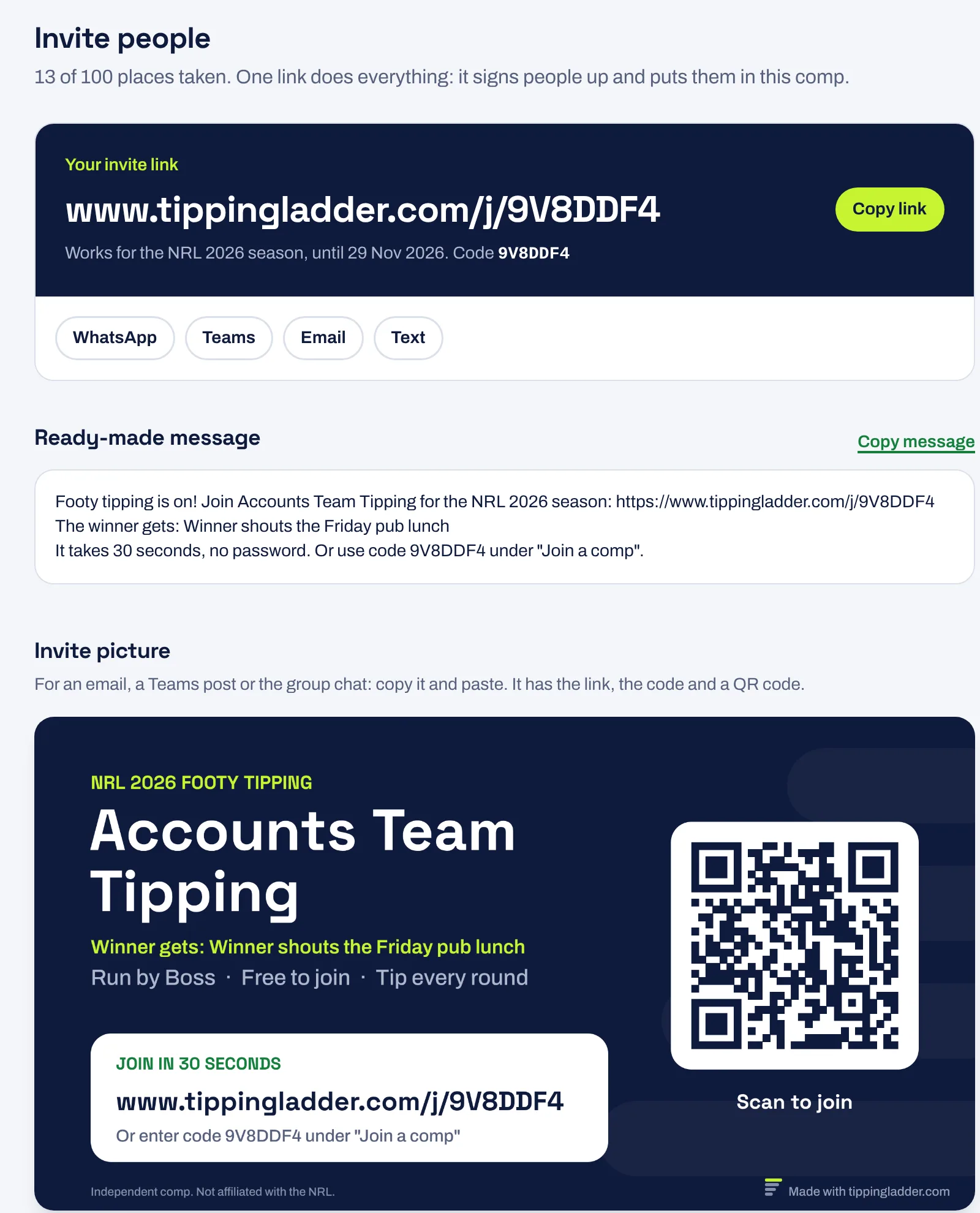
Two things that lift sign-ups in an office: put the QR code on a poster in the kitchen or on a slide at the team meeting, and paste the invite picture into the team channel rather than a plain link. It shows the comp name and what the winner gets, which is what makes people click.
4. Keep people tipping all season
The first few rounds take care of themselves. The real test is a wet Thursday in round 14. Two things keep an office comp alive:
- Reminders that only go to people who haven’t tipped. Each tipper chooses email or app notifications (and texts, on Plus) and how long before lockout they want them. Nobody who has already tipped gets pestered.
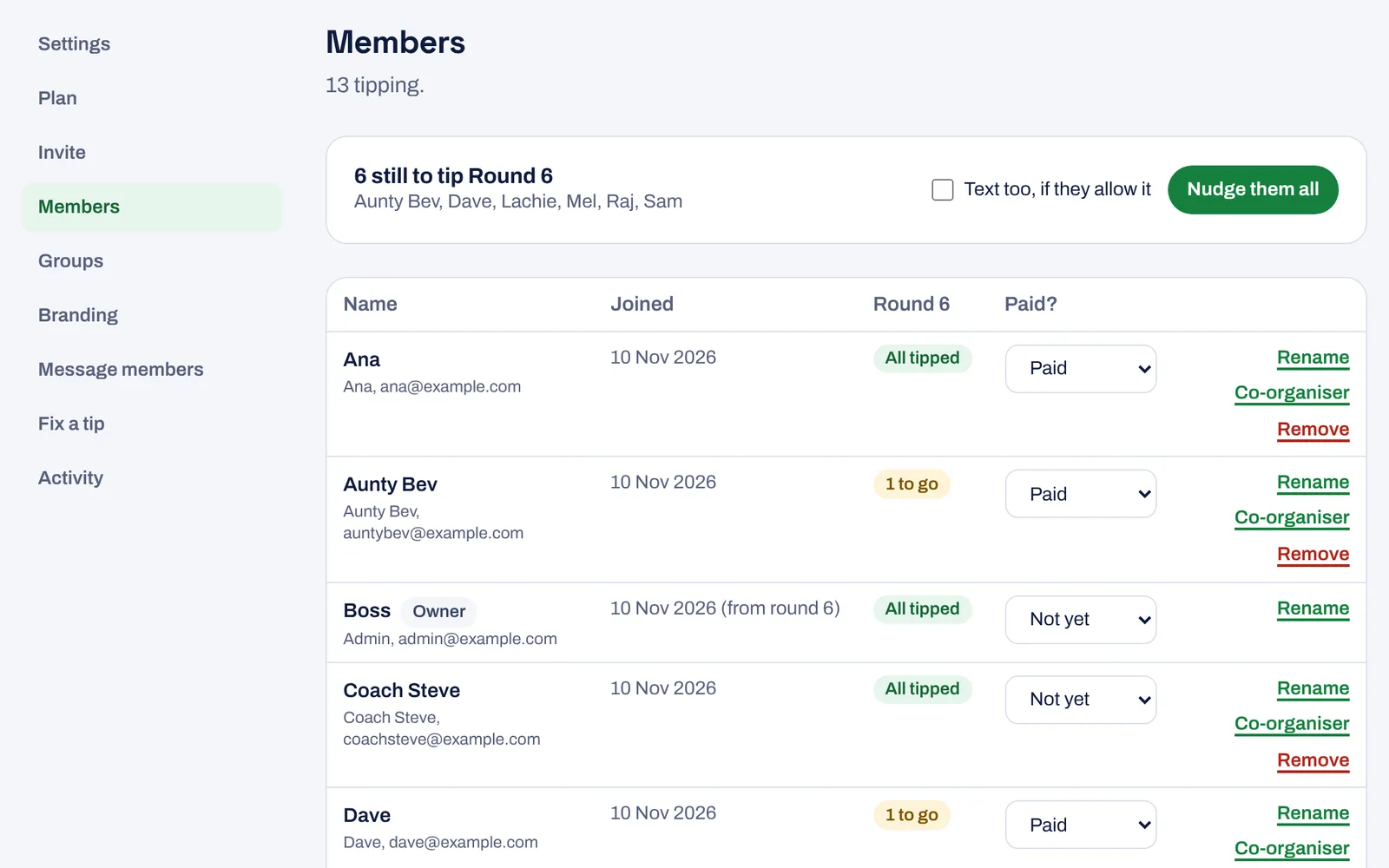
- A one-tap nudge. The organiser’s members page shows exactly who is still to tip this round, with a button to nudge them all at once.
5. Make the ladder the talking point
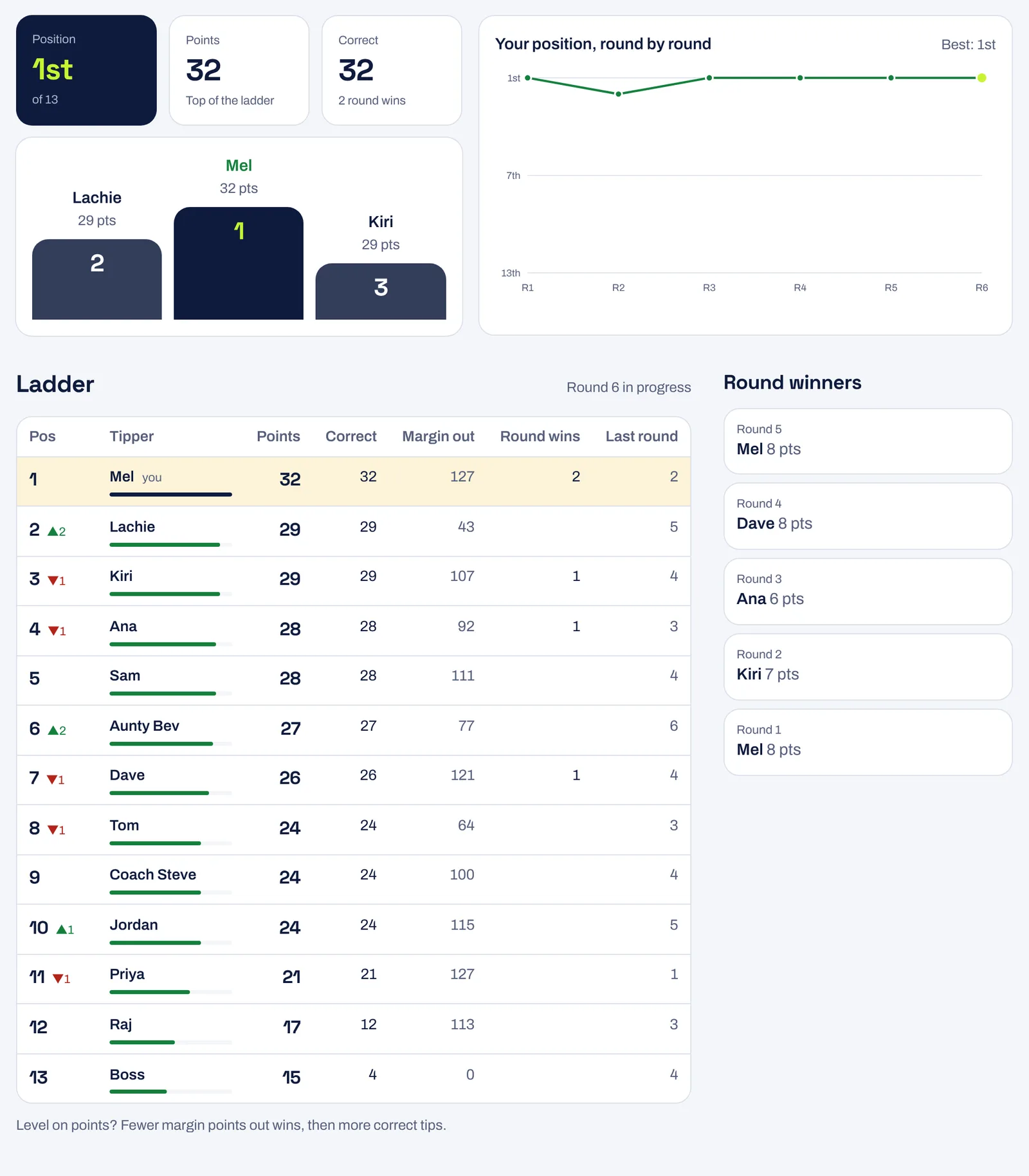
The ladder updates by itself after every game, with movement arrows, a podium and each person’s position round by round. After each round, a short wrap email names the round winner, any perfect rounds and the biggest climber, which is usually enough to get a conversation going.
In a bigger office, groups (on Plus) give each team or floor its own ladder as well as the overall one. Finance against sales is a much better story than 47th out of 80.
6. Prizes: keep them simple
The best office prizes cost little and get talked about. A few that work well:
- A trophy that lives on the winner’s desk until next season (the uglier the better).
- The winner gets shouted lunch or coffee by the person who finishes last.
- The best car park for a month, or first pick of the leave calendar, if management agrees.
- A small round prize, like a coffee for the weekly winner, to keep the bottom half interested.
- A wooden spoon for last place, presented with ceremony.
Add what the winner gets when you set the comp up: it’s pinned to the top of the comp and the invite all season. No money goes through Tipping Ladder. If your office decides to chip in for something, that’s arranged among yourselves, and the rules differ between states, so check who looks after tipping comps in your state first.
7. Keep it fair (and seen to be fair)
The quickest way to kill an office comp is a suspicion that someone is getting a better deal. Three things help:
- Tips lock at kickoff on the server. Nobody can tip late, whatever their phone’s clock says.
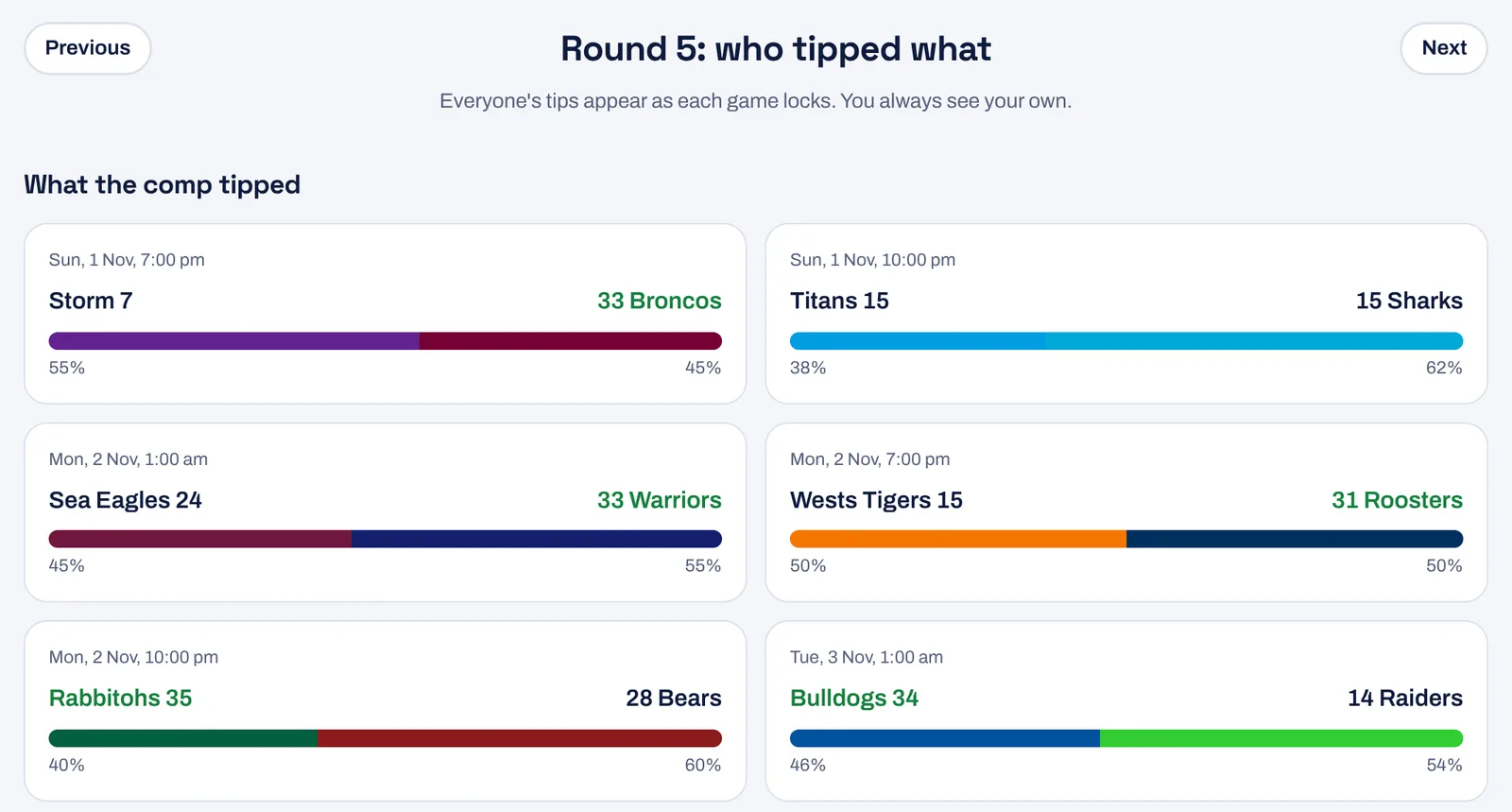
- Tips stay hidden until each game locks, then everyone can see who tipped what. No copying the person who’s top of the ladder.
- Changes are public. If the organiser has to fix someone’s tip (say they texted it in before kickoff), they give a reason, and the change and the reason appear in a log everyone can see.
Your checklist
- Choose AFL or NRL (or both), and a simple format.
- Settle the tiebreaker, missed tips, late joiners and lockout, and put them in the comp’s note.
- Add what the winner gets.
- Send the invite link and picture a week or two before round 1, and again just before it.
- Let reminders do the chasing; nudge anyone still to tip on the day.
- Share the ladder and the round wraps, and enjoy Monday mornings.
A comp of up to 20 people is free. For a bigger office, Plus is $49 for the whole season for up to 100 tippers, with reminder texts, groups and your logo. See office tipping comps for more, or how to set one up for AFL or NRL.